Part 1 — The Spark of Color: Giving AI a Voice Beyond the Screen
Exploring the beauty of analog output in a digital age through the Vestaboard and Llama-3.2-1B.
Introduction
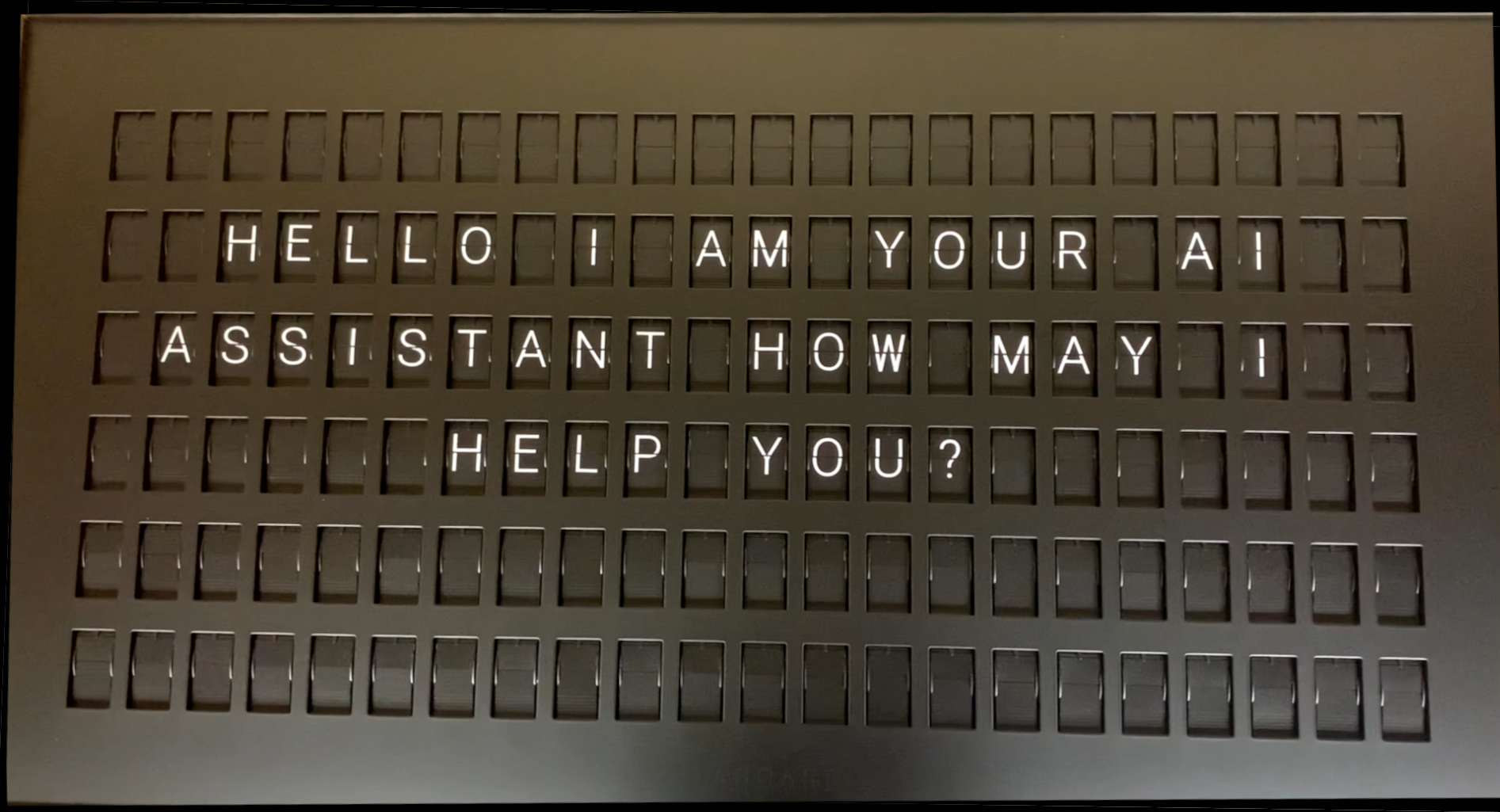
In a world dominated by pixels and glass screens, the humble Vestaboard stands apart — a mechanical display that communicates with sound, motion, and color. Each flipping tile is a whisper of nostalgia in a digital storm.
This is where my latest experiment began: Could an AI model "speak" through an analog medium?
The Concept
I set out to fuse three powerful ideas:
- Natural language understanding powered by the
Llama-3.2-1B-Instructmodel. - LangChain's orchestration, providing structured, dynamic reasoning flows.
- The Vestaboard API, which transforms text into living motion and analog rhythm.
The result: a local AI chatbot that thinks digitally but speaks mechanically.
Why Vestaboard?
Vestaboard is not your typical IoT display. It's tactile, emotional, and deliberately slow — every message feels intentional. That slowness became part of the art: translating AI conversation into something you see and hear, not just read.
Building the Foundation
Using LangChain, I created a conversational chain that connects user prompts to Llama-3.2-1B-Instruct running locally. Gradio served as the front-end playground — a minimal chat interface. Finally, the Vestaboard API bridged the analog frontier.
In the next article, we'll dive into wiring it all together — the code, architecture, and design decisions that made the magic happen.
This is Part 1 of the series